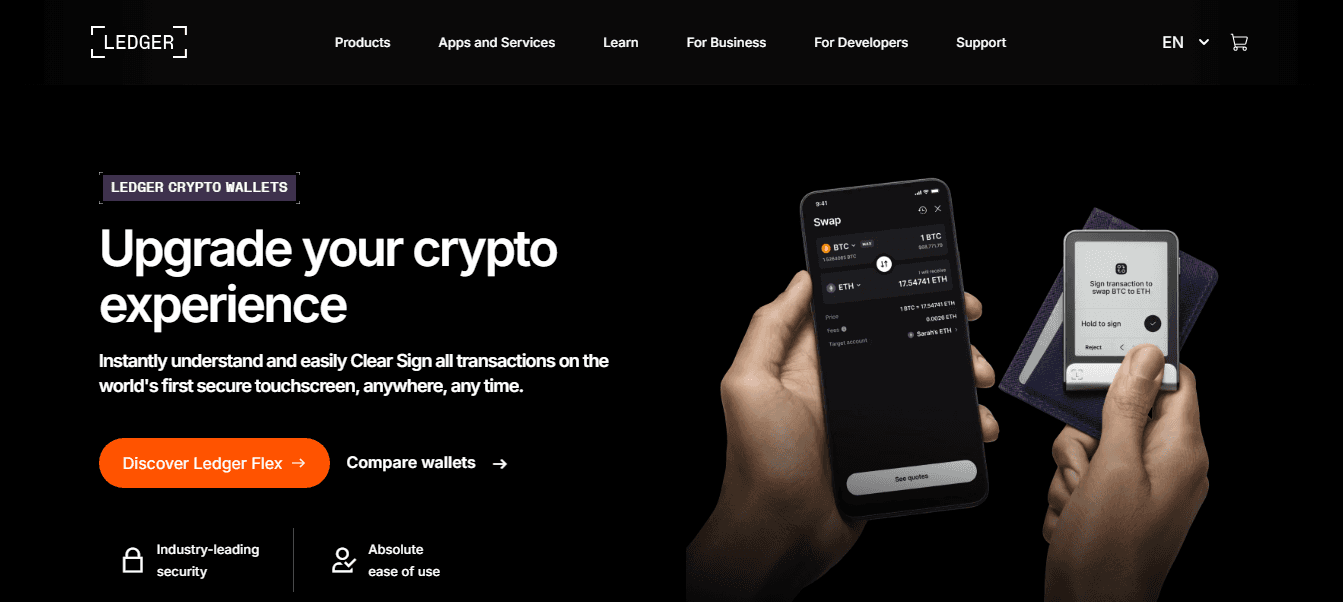
Ledger Live is a powerful crypto management application that works as the companion software for Ledger hardware wallets, giving users a secure, all‑in‑one interface to view, manage, and grow their digital assets. It combines portfolio tracking, transaction management, staking, and Web3 access in a single dashboard, designed to keep private keys offline while still enabling rich on‑chain interactions.
What is Ledger Live?
Ledger Live is a desktop and mobile application that connects to Ledger devices like the Nano series and acts as the control center for your cryptocurrencies and tokens. It lets you see your entire portfolio across multiple accounts and blockchains in one place, with real‑time balances and transaction histories presented in a clear, user‑friendly layout. The app is built to work seamlessly with the hardware wallet so that all sensitive operations, such as signing transactions, remain on the secure device instead of your computer or phone.
Beyond basic wallet features, Ledger Live supports functions like buying, selling, swapping, and staking selected assets through integrated third‑party services. This means a user can manage most of their crypto activity without leaving the application, while still benefiting from hardware‑grade security for key management. The software is available on major desktop operating systems and mobile platforms, ensuring that portfolios can be monitored and managed from almost anywhere.
Core Features and Capabilities
Ledger Live offers a comprehensive toolkit designed for both beginners and experienced crypto users. At its core, the application provides a portfolio overview that shows total holdings, asset allocation, and market value changes over time. Users can create multiple accounts for different coins and networks, keeping funds organized by strategy, purpose, or risk profile, while still seeing consolidated statistics at a glance.
The app includes essential wallet functions such as sending and receiving cryptocurrencies with support for custom fees and memo fields where applicable. Transaction history is stored and presented in a clear timeline, making it easier to review past operations or export data for personal record‑keeping and tax reporting. Many versions also incorporate price alerts and market views, helping users stay aware of important movements without needing to constantly check external market trackers.
Security and Hardware Integration
One of the main strengths of Ledger Live lies in its deep integration with Ledger hardware wallets. Private keys are generated and stored inside the secure element chip of the hardware device and never leave it, even when interacting with networks through the app. When a user initiates a transaction or interacts with a decentralized application, the transaction data is displayed on the device screen for verification, and the user confirms by pressing physical buttons, ensuring that malicious software on a computer or phone cannot silently approve operations.
The application supports additional layers of protection such as password locking, optional two‑factor‑style workflows, and secure backup procedures tied to the recovery phrase stored offline by the user. Firmware and app updates for the hardware wallet can often be managed directly from Ledger Live, allowing users to keep security patches and new features up to date with a guided process. This combination of secure hardware and carefully designed software substantially reduces the risk of remote hacks and phishing attacks that commonly affect purely software‑based wallets.
Ledger Live on Desktop and Mobile
On desktop systems, Ledger Live typically provides the fullest feature set, including advanced account management, multi‑device handling, and detailed settings. Users can connect several Ledger devices and manage distinct portfolios within a single installation, which is particularly useful for separating long‑term holdings from more active trading or for managing family or business funds. The interface usually includes a dashboard, accounts section, send/receive panels, staking and earn sections, and a manager area for installing or removing coin apps on the connected hardware device.
The mobile application focuses on portability and quick access to portfolio data and essential operations. With supported devices and connection methods, users can pair their Ledger hardware wallet to a smartphone and sign transactions while on the move, all while maintaining the same core security model. Mobile versions generally mirror the desktop experience in design language, making it easy to switch between platforms without a learning curve. Push notifications and on‑the‑go price monitoring add further convenience for users who actively track market conditions.
Onboarding and Daily Use
Getting started with Ledger Live typically begins with installing the application, connecting a Ledger hardware wallet, and completing initial checks such as device authenticity and firmware status. New users create or restore wallets on the hardware device using their recovery phrase, and then use the app to add accounts for specific coins like Bitcoin, Ethereum, or other supported networks. Each account appears with its own address list, recent transactions, and balance, allowing precise tracking of different holdings.
Day‑to‑day usage revolves around monitoring the main dashboard to see total portfolio value and asset distribution, then navigating to specific accounts to send or receive funds. When sending, the user enters the destination address and amount in the app, then confirms the details on the hardware device before approval. For receiving, the app displays a public address and corresponding QR code while the device can verify the address, helping prevent address‑replacement malware. Over time, the transaction history and performance views help users understand how their positions have evolved.
Staking, DeFi, and Advanced Functions
Ledger Live often includes integrated earning features, allowing users to stake supported cryptocurrencies directly through the app. By delegating assets to validators or staking pools, holders can earn rewards while keeping control of their private keys on their hardware wallet. The interface typically guides users through choosing a validator, setting the amount to stake, and later claiming rewards or redelegating, reducing the need to interact with complex external staking dashboards.
In certain environments, the application also works as a gateway to Web3 and decentralized finance by acting as the secure signing layer for interactions with dApps. Users can approve smart contract calls and token permissions on their hardware device, ensuring they see the critical details before committing. While the specifics vary by network and integration, this approach allows people to explore more advanced blockchain use cases without giving up the protection offered by their hardware wallet.
Best Practices for Safe Use
To get the most from Ledger Live while staying safe, users should follow a few key habits. First, the recovery phrase must always remain offline, written on paper or stored in another secure physical medium, and never typed into a computer, smartphone, or website. This phrase is the only ultimate backup of the wallet; anyone who obtains it can control the funds, but if it is lost, the assets cannot be recovered.
Second, software and firmware should be kept up to date through official channels, since updates often contain security improvements and bug fixes. Users should confirm actions on the hardware device screen carefully, paying attention to the destination address and amounts before approving. It is also wise to protect access to Ledger Live with a strong password on the computer or phone, and avoid using the application on untrusted or public machines whenever possible, even though the hardware wallet mitigates many risks.
Who Ledger Live Is For
Ledger Live targets a wide range of users, from newcomers looking for a straightforward way to manage their first cryptocurrencies to seasoned investors who use multiple accounts and assets across different blockchains. Beginners benefit from the guided setup, clear interface, and integrated services that simplify buying, storing, and learning to send and receive coins. The visual portfolio overview and simple workflow reduce the intimidation that can come with managing private keys and blockchain addresses for the first time.
More advanced users appreciate the ability to handle many supported coins and tokens from a single environment, manage hardware wallets centrally, and connect to more complex features like staking and Web3 interactions with consistent security practices. For long‑term holders who prioritize security but still want visibility and control, Ledger Live offers a practical balance between robust protection and everyday usability, making it a central tool in many self‑custody strategies.